Space

“[NASA] currently [does] not have any activities underway at LC-49.”

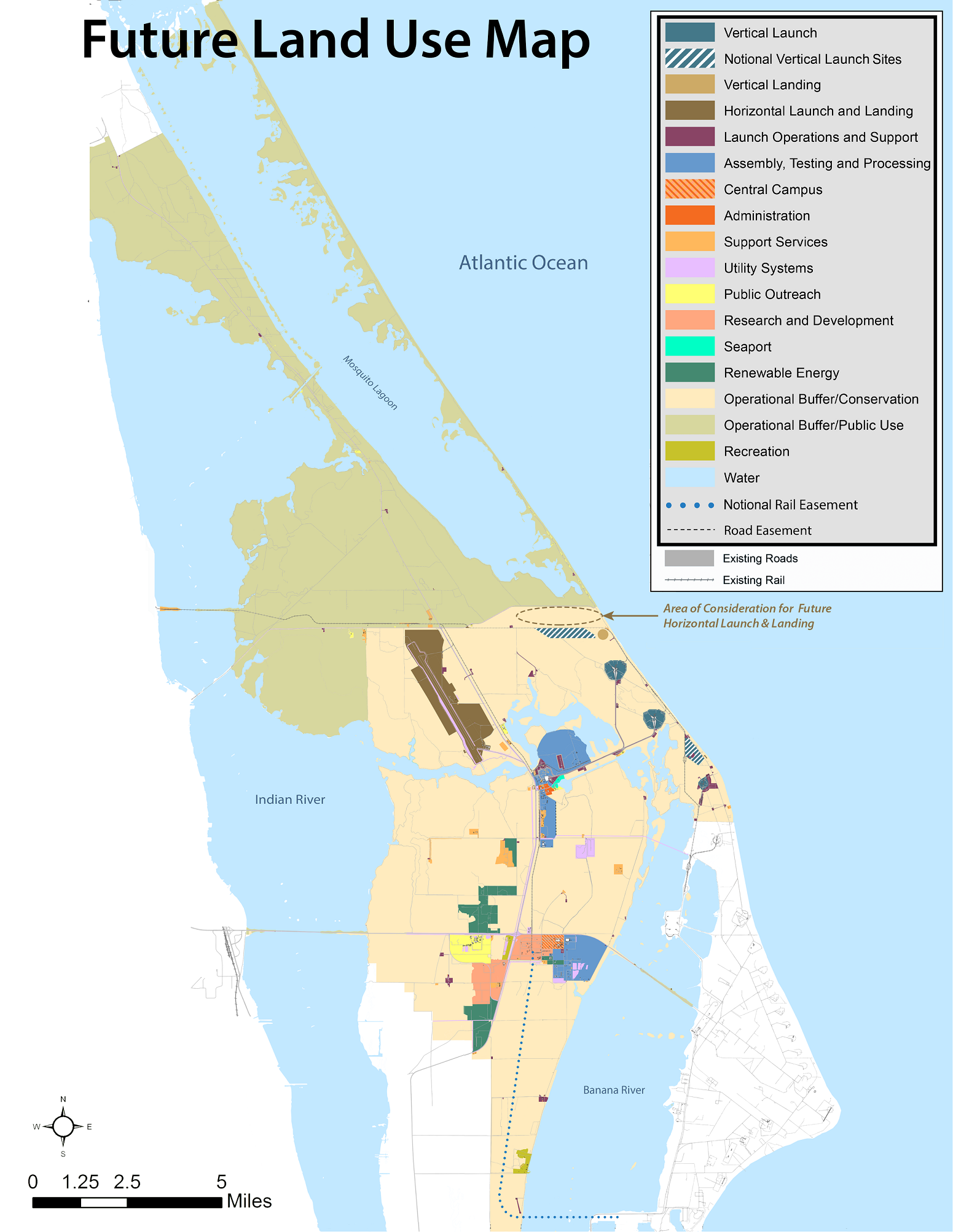
For many years, NASA has had a potential new launch pad on its Master Plan for Kennedy Space Center: LC-49 is projected to be built on the northern end of KSC property near its border with the Merritt Island National Wildlife Refuge.

There is also an LC-48 on the slate, located between the current LC-39A (Falcon 9, Falcon Heavy) and SLC-41 (Atlas/Vulcan) but it has not received the same amount of mention in the space community, nor the same amount of concern among some local residents as the potential LC-49.

Kennedy’s Master Plan

“One potential new vertical launch area, Launch Pad 49, could be sited to the north of Pad 39B.  This location avoids overflight issues with Pad 39B and minimizes conflict with the Canaveral National Seashore, giving potential non-NASA entities a flexible set of operational options.  In addition, Pad 49 could use Beach Road as an access road, allowing for more autonomous operations and the option to operate outside of KSC’s secured area.”

Kenndy Space Center’s Master Plan

This has been on the site’s master plan in one form or another, dating back to the 1960s, and speculation of the potential of a new pad being built has risen lately due to SpaceX’s Starship due to come online in the near term.

Spacenews.com reported on December 22, 2021:

“[Kennedy Space Center] announced last week that it was starting the process of an environmental review of the proposed Launch Complex (LC) 49 in response to an inquiry from SpaceX. The center did not disclose a timeline for conducting the review but said it would precede any agreement with SpaceX to develop the site.

“Launch Complex 49 is located to the northwest of Launch Complex 39B, the former Apollo and shuttle launch pad that will be used by the Space Launch System. The site was originally reserved in the 1960s for Launch Complex 39C but never developed.”

SpaceX Starship Facility at LC-39A

In 2021, SpaceX began building a launch tower for its future Starship operations at the Cape, but it appears that the company has taken a pause in constructing that launch tower, ostensibly to focus on completing Starship development, which will almost certainly inform the final design and construction of the new tower.

Given SpaceX’s iterative development method that makes a lot of sense and should not necessarily be considered a sign that they are abandoning any plans to complete the new pad next to LC-39A. The company has not made any public statement regarding the half-finished pad, and while work has apparently slowed on the structure, there is no sign of it being dismantled either.

SpaceX has made extensive changes to a similar launch pad at their Boca Chica orbital launch pad in recent months, so it makes sense to expect they will want to do the same to the pad at the Cape — when they are ready to bring Starship operations here to the Space Coast and the Eastern Range. That is speculation, however, and should be considered as such until concrete evidence of its accuracy is confirmed or disproven.

But What About LC-49?

At the same time, that apparent pause at LC-39A does not fully address LC-49. Talk of Titusville reached out to NASA to find out what progress is being made towards LC-49 actually being built in the relatively near future. Given that previous reports indicated that an environmental study was underway in 2021, it seems sensible that those studies would be complete or nearly so in 2024. They replied to us on January 18, 2024 and said that “[NASA] currently [does] not have any activities underway at LC-49.”

NASA added that, “all previous activities there have been suspended, including anything involving any commercial companies. We’re not currently working any NEPA or environmental actions. KSC did complete an environmental assessment in 2018-19 for the development and operations of the site, which included the construction of the existing launch pad.”

That “existing launch pad” they are referring to is almost certainly the new Starship launch pad referred to above, and that pad will not be completed for some time.

Good News For Titusville Residents and Visitors

This is likely going to be welcome news for Titusville residents. Were LC-49 built in the area planned for in the NASA Future Land Use Map (FLUM), once operational, it would likely cause repeated closings of Beach Road leading to Playalinda Beach, meaning that local beachgoers would have no route to the undeveloped beach areas located there. That is because at some points on Beach Road, an LC-49 could be as little as one mile away.

Those closures would come during fueling tests, static fires and launch activities due to Beach Road’s proximity to the LC-49 complex. Playalinda Beach is already often closed by KSC Police and the National Park Service for many launches from LC-39A and LC-39B, due to safety and security concerns during launch operations. LC-49 would result in much the same, and given SpaceX’s plans for a high cadence of Starship launches for Artemis and other commercial activities, those closures may have become a major inconvenience for residents and tourists alike.

With an estimated 1.52.0 million visitors a year, the Cape Canaveral National Seashore incorporates Playalinda Beach in its southern section as well as others (Apollo Beach) to the north. It is a major source of tourism dollars for Titusville, and it is the only beach available to local residents between Cape Canaveral’s Jetty Park and Apollo Beach in New Smyrna. In 1962, Titusville Beach was absorbed into Kennedy Space Center, leaving Playalinda, in the Merritt Island National Wildlife Refuge.

According to NASA’s statement that no activities are ongoing to build the new pad, there is little reason to worry about this happening any time in the near future.

Read more

Astrobotic’s Peregrine Mission One splashed down in the South Pacific yesterday around 4:04 pm local time on January 18th, completing its trip to space after launching from Cape Canaveral on January 8, 2024.

In their final mission update, Astrobotic said

Peregrine Mission One has concluded. We look to the future and our next mission to the Moon, Griffin Mission One. All of the hard-earned experience from the past 10 days in space along with the preceding years of designing, building, and testing Peregrine will directly inform Griffin and our future missions. 

Peregrine and its payload teams have made a meaningful contribution to our lunar future, and we thank everyone who supported this mission. Courtesy of United Launch Alliance, this video was captured from their Vulcan rocket’s payload fairing.

Peregrine has flown so Griffin may land.

Astrobotic: Final Update for Peregrine Mission

Great Start

Peregrine enjoyed a perfect ride to space on board United Launch Alliance’s Vulcan rocket making its maiden voyage on January 8th. That launch was deemed a success after what ULA CEO Tory Bruno labeled as a “Bullseye” launch that ended nearly precisely in its intended orbital altitude, inclination and speed.

Shortly after being placed in orbit, communications with Peregrine was established by Astrobotic, and the spacecraft was sent on its course to the moon. Not long after that, Peregrine’s problems began. Those problems precluded completing the primary mission of a soft lunar landing, and instead, Astrobotics salvaged what science they could from the mission and prepared for an eventual conclusion.

The lander made it’s controlled re-entry on January 18th, concluding the first of NASA’s Commercial Lunar Payload Services missions.

Next CLPS Mission

CLPS will try again next month when Intuitive Machines’ Nova-C lander (IM-1) is scheduled to launch on a SpaceX Falcon 9 rocket sometime in February.

Read more

Falcon 9 lifting off carrying four European astronauts to the International Space Station on January 18, 2024.

Minutes before a warm front brought heavy showers to Kennedy Space Center, SpaceX launched Crew Dragon aboard a Falcon 9 for Axiom Space on a chartered flight to the International Space Station at 4:49 PM EST this evening. The all-European crew is expected to dock at ISS in two days time, and stay aboard the station until February 3, 2024.

Read more

Minutes before a warm front brought heavy showers to Kennedy Space Center, SpaceX launched Crew Dragon aboard a Falcon 9 for Axiom Space on a chartered flight to the International Space Station at 4:49 PM EST this evening. The all-European crew is expected to dock at ISS in two days time, and stay aboard the station until February 3, 2024.

Read more

Crew Dragon atop a Falcon 9 at Pad LC-39A at Kennedy Space Center on January 17, 2024.
Photo by Charles Boyer, Talk of Titusville.

With about six hours left in the countdown to liftoff, SpaceX announced that they are canceling today’s planned launch of Falcon 9 carrying four astronauts to orbit aboard a Crew Dragon to the International Space Station. The mission on behalf of Axiom Space is dubbed Axiom-3 and will now launch NET Thursday, January 18, 2024 at 4:47 PM EST.

Read more

Astronauts Alper Gezeravcı, Marcus Wandt, Michael López-Alegría, Walter Villadei examining their ride to space, a Falcon 9, in September 2024
Photo courtesy of Axiom Space

The 45th Weather Squadron has released its official Launch Mission Execution Forecast for tomorrow’s planned crewed launch of Axiom-3 by SpaceX. According to forecasters, there is less than a 5% Probability of Violation of weather conditions, meaning the weather is expected to be almost perfect, especially by Florida standards: they expect a 95% or greater chance of acceptable weather conditions. The launch is planned for 5:11 PM EST. Once in orbit, the astronauts will travel to the International Space Station for an anticipated 14-day stay.

Read more

SpaceX Falcon 9 lifts off with the Starlink 6-37 mission aboard. It’s destination is low-Earth orbit where 23 satellites will be placed in the Starlink constellation.
Photo: Charles Boyer / Talk of Titusville

SpaceX sent another batch of 23 Starlink satellites for their orbital-based Internet service tonight from Cape Canaveral aboard a Falcon 9 booster. The mission was designated Starlink 6-37, part of Group 6 of Starlink satellites providing global Internet connectivity to the company’s customers.

Liftoff was shortly after 8:52 pm EST from Pad SLC-40 at Cape Canaveral Space Force Station. Tonight’s re-useable booster was B1071 making its 12th flight. Roughly eight and a half minutes after liftoff, B1071 touched down safely near the Bahamas on a droneship in the Atlantic Ocean.

The second stage continued to carry the company’s payload to orbit, which it achieved successfully at about the same time the first stage booster was touching down. Shortly afterward, the Starlink satellites were deployed and the launch was deemed a success by mission managers.

Mission Trajectory

Tonight’s launch was to the southeast, as has been customary with other launches of the Group 6 batch of Starlink satellites.

16th Flight for Booster B-1076

This was the 12th flight for the first stage booster supporting this mission is B1071. The booster previously launched SES-22, ispace’s HAKUTO-R Mission 1, Hispasat Amazonas Nexus mission, CRS-27, and seven Starlink missions.

Following stage separation, the first stage landed on the autonomous spaceport drone ship (ASDS) A Shortfall of Gravitas droneship, stationed in the Atlantic Ocean northeast of the Bahamas.

The booster will be returned to Port Canaveral and then transferred to SpaceX’s Hangar X facility at Kennedy Space Center for inspection and ostensibly refurbishment for another flight on a future mission.

Next Launch

Axiom-3, a crewed launch planned to ferry four astronauts to the International Space Station aboard a Falcon 9.

Axiom-3 Flight Patch
Image courtesy: Axiom Space

The mission will be the first to carry and all-European crew to the International Space Station. It will be the third crewed mission to the International Space Station coordinated by Axiom Space.

Ax-3 will be the first all-European commercial astronaut mission to the ISS. It will also be the first commercial spaceflight mission made up of government and European Space Agency-sponsored astronauts flying on behalf of their nation.

The launch date is NET Wednesday January 17, 2024 at 5:11 PM EST from Pad LC-39A at Kennedy Space Center.

Read more

A SpaceX Falcon 9 in 2023, about twenty minutes prior to liftoff.
Photo: Charles Boyer / Talk of Titusville

SpaceX called off its launch attempt of Falcon 9 from SLC-40 at Cape Canaveral Space Force Station early this evening, around 7:18pm. The company did not share a reason for their decision, but it made the call early, with about ninety minutes left on the countdown clock.

Later on, SpaceX announced that announced on their website that they are now

“SpaceX is targeting Sunday, January 14 for a Falcon 9 launch of 23 Starlink satellites to low-Earth orbit from Space Launch Complex 40 (SLC-40) at Cape Canaveral Space Force Station in Florida. Liftoff is targeted for 7:27 p.m. ET with backup opportunities available until 11:25 p.m. ET.”

SpaceX Starlink 6-37 information page. Note: dates and times may be changed on the SpaceX website without notice. Click the link for currently up-to-date information.

Weather

The 45th Weather Squadron’s forecast looks good tomorrow, with conditions deteriorating if there is another 24 hour delay.

As always, launch times are fluid and can change quickly.

Read more

A Starlink launch in September 2023.
Photo: Charles Boyer / Talk of Titusville

SpaceX plans to launch another batch of Starlink satellites aboard a Falcon 9 to its LEO Internet service constellation on Saturday, January 13, 2024. The launch window opens at 7:52 PM EST and closes early Sunday at 12:23 AM. The launch will be from Pad SLC-40 at Cape Canaveral Space Force Station. Weather is a slight concern for the launch as a warm front pushes storms through the area today.

Trajectory

Southeast, as has been customary for Starlink’s Group 6 launches.

Weather

One day before launch, the 45th Space Wing forecasts a 70% chance of acceptable weather, with a 30% Probability of Violation that would force a scrub.

As always, it bears keeping in mind that a rocket launch can be scrubbed (canceled) up to and including the final minute of the countdown. Those scrubs may result from weather violations, intrusion into the excluded areas beneath the planned flight path or technical issues that arise during the countdown. Stay tuned to launch coverage for up-to-date information.

Launch Coverage

SpaceX will begin live-streaming the launch on their X account about five minutes before liftoff.

Spaceflight Now usually begins their live coverage about one hour prior to liftoff on their YouTube channel.

Read more