

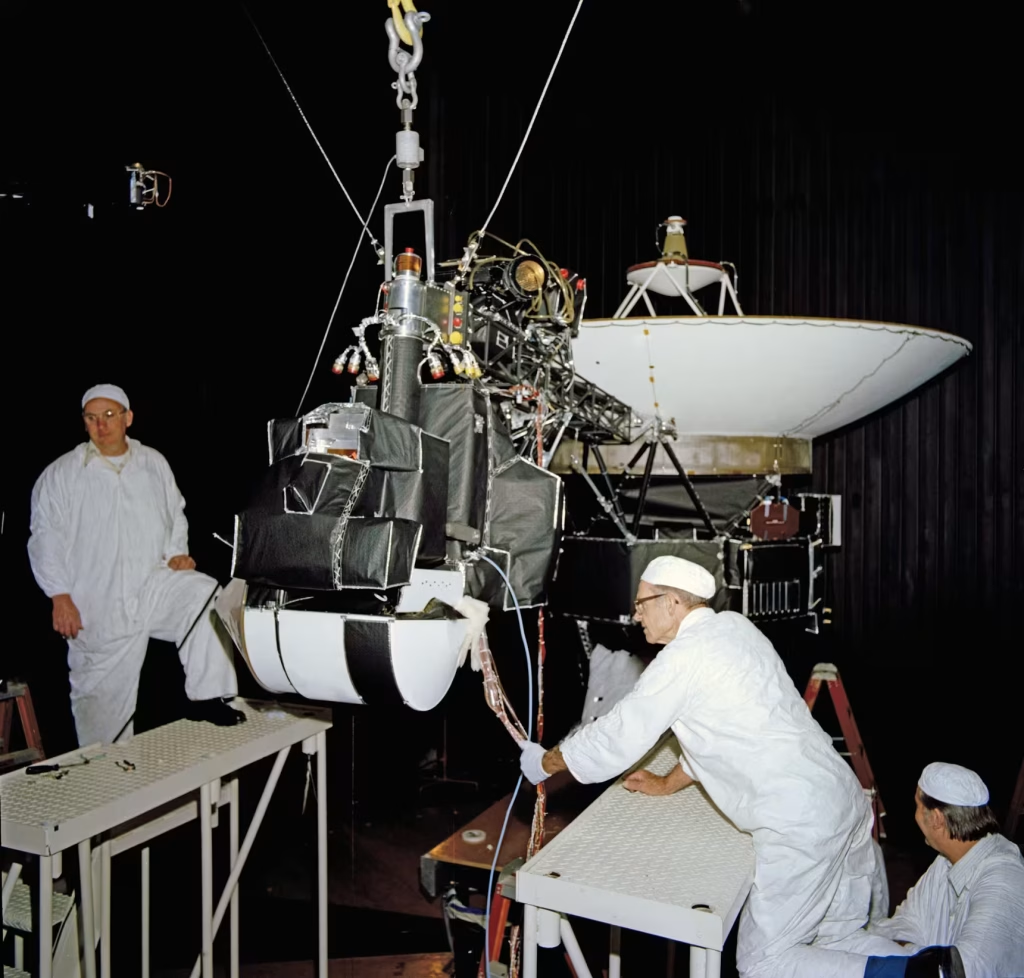
Photo: NASA / JPL
According to NASA and the Jet Propulsion Laboratory, Voyager 1, one of humanity’s two probes in interstellar space, has resumed sending engineering data back to Earth.
Last November, Voyager 1 stopped sending readable science and engineering data back to Earth, halting ongoing measurements and investigations. Mission controllers could tell the spacecraft was still receiving their commands and otherwise operating normally but could not do much else, leaving mission managers and engineers scrambling to assemble a team to fix the aging spacecraft.
According to a press release from JPL and NASA, “In March, the Voyager engineering team at NASA’s Jet Propulsion Laboratory in Southern California confirmed that the issue was tied to one of the spacecraft’s three onboard computers, called the flight data subsystem (FDS). The FDS is responsible for packaging the science and engineering data before it’s sent to Earth.”
“The team discovered that a single chip responsible for storing a portion of the FDS memory — including some of the FDS computer’s software code — isn’t working. The loss of that code rendered the science and engineering data unusable. Unable to repair the chip, the team decided to place the affected code elsewhere in the FDS memory. But no single location is large enough to hold the section of code in its entirety.”

NASA, ESA, and Z. Levay (STScI)
They continued by saying, “[T]hey devised a plan to divide affected the code into sections and store those sections in different places in the FDS. To make this plan work, they also needed to adjust those code sections to ensure, for example, that they all still function as a whole. Any references to the location of that code in other parts of the FDS memory needed to be updated as well.”
Brilliant computer science work that was, especially for a vehicle about 15.12 billion miles from Earth, traveling at 38,026 miles per hour. Currently, it takes roughly 22.5 hours for a signal to travel from Voyager 1 to Earth (and vice versa), creating a major challenge in communications.

The narrow bandwidth further complicates those communications: about 40 bits per second for engineering data, or roughly five alphanumeric characters each second. By comparison, the median Internet speed in the US is 242.38 Megabits per second, or 30.2 million characters.
In the next few weeks, the Voyager 1 team plans to relocate and adjust the affected portions of the FDS software including portions that will start returning science data. Meanwhile, Voyager 1 will continue to travel away from the Earth.
You must be logged in to post a comment.